

How a 1930s Workout Routine Still Builds Strength Today
Strength Before Selfies

There are workouts that build strength, and then there are workouts that build character. The 20-rep squat routine does both. It's one of the most brutally effective training methods I’ve ever tried, and it’s something I’ve returned to again and again over the years. Not because it’s easy. But because it works.
Let me take you back to where it all began.
A Bit of History
The roots of the 20-rep squat routine stretch back to the 1930s, when JC Hise first promoted the idea of performing heavy squats for high reps, typically followed by breathing pullovers. Perry Rader, the editor of Iron Man magazine, famously adopted the method and transformed his skinny frame into something far more formidable using this exact system. Over time, the routine faded from mainstream popularity, overshadowed by the rise of split routines and more machine-based approaches.
But it never truly died.
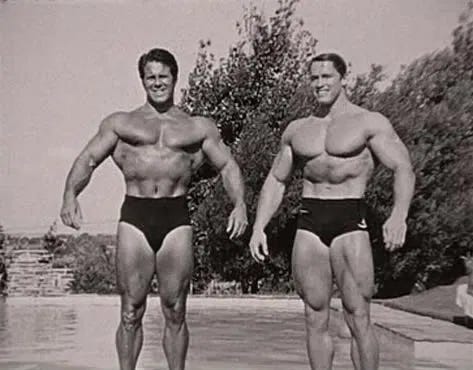
Reg Park, one of Britain’s most iconic bodybuilders and a hero to many (including a young Schwarzenegger), was known for his 5x5 programming, but he too was a fan of the 20-rep squat—especially in his foundational years. This was before the widespread use of steroids, when muscle was earned with raw iron and grit.
My First Encounter


I first came across the 20-rep squat in the late 80s or early 90s. At that time, magazines like Muscle & Fitness and Flex dominated the shelves, filled with glossy images and ghostwritten routines that promised championship physiques but rarely delivered results for everyday lifters like me. Enter two authors who changed everything for me: Randall J. Strossen and Stuart McRobert.


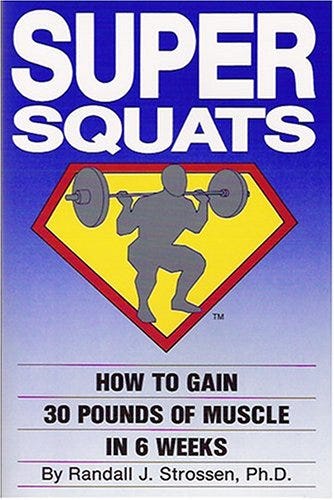
Strossen’s Super Squats promised “30 pounds of muscle in 6 weeks,” a claim that bordered on the ridiculous—but the simplicity of the program cut through the noise. McRobert’s Brawn and his independent magazine HardGainer were a lifeline for those of us who didn’t respond to high-volume, high-frequency programs. These resources promoted abbreviated, focused routines that centered on effort and progression—not complexity.
My Results
The principle was simple: one all-out set of 20 squats, adding a tiny bit of weight each session. I started with 60kg. I added weight consistently, rep after rep, session after session, until I found myself squatting 140kg for 20 reps. That kind of strength doesn’t happen by accident. It happens when you show up, grit your teeth, and put in the work.
Even now, decades later, I find myself returning to this program—albeit with lighter weights. A set of 20 reps with 100kg still delivers the same magic. The discomfort. The focus. The raw effort.
What the Program Typically Includes
While squats are the backbone, the full routine often includes:
Breathing pullovers – historically thought to expand the rib cage
Overhead presses
Pull-ups or rows
Bench presses
Romanian deadlifts or stiff-legged deadlifts
It’s not a long list—but that’s the point. The simplicity is deceptive. The effectiveness is undeniable. I probably did a few more sets of some other exercises but they were always basic movements.
Why It Works (Even Now)
Most gym-goers are overcomplicating things: too many sets, too many exercises, too many days. These old-school programs boiled everything down to what actually works. One full-body session. Three times per week. Small, consistent progress. That’s it.
And forget double progression models. In these old routines, you just add a tiny bit of weight every session. Half-kilo plates. A pound here, a pound there. Over time, those add up. You build strength. You build size. And maybe most importantly—you build belief.
In my experience the most often neglected part of any training routine over the age of 40, is recovery. Random split routines and performance based programs that don’t account for diminished recovery abilities past forty are just not that effective. More is not always better. More is just More!
Final Thoughts
There’s a reason I keep going back to 20-rep squats. They’ve never failed me. They taught me more about hard work than any spreadsheet ever could. They stripped away the fluff and forced me to focus on what mattered: progressive overload, recovery, and consistency.
So if you’re frustrated with your progress or sick of jumping from one shiny new program to the next, maybe it’s time to go back—way back. Try the 20-rep squat routine. Read Super Squats and Brawn. Keep it simple. Train hard. And discover what one set can do.
Because sometimes, one set really is enough.